
Intimate Moments Within Savannah's Historic Cemeteries
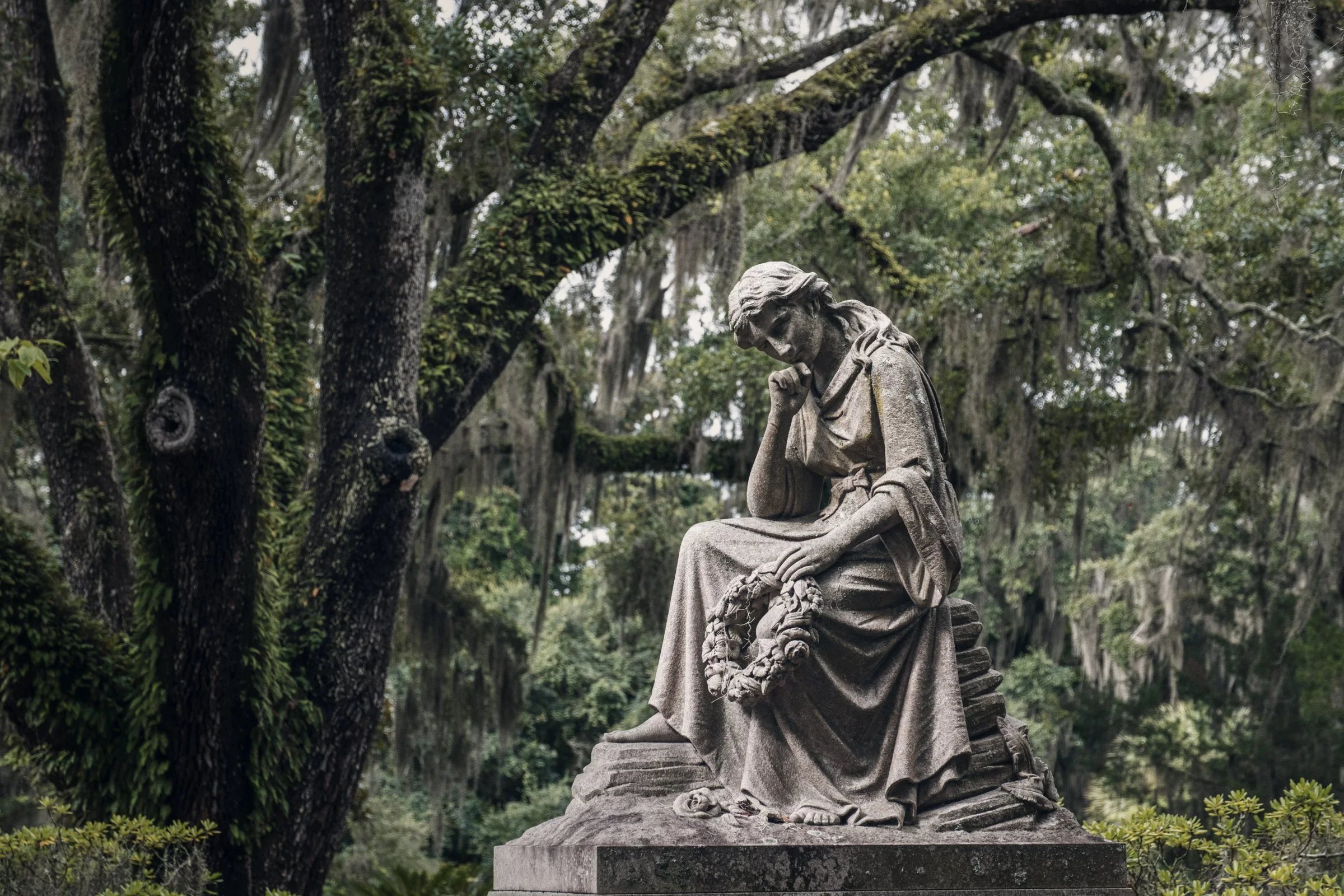
Bonaventure Cemetary, Savannah, GA
What does it mean to walk among the dead in a city still very much alive?
In an age that moves quickly—where death is often hidden from view and grief is handled quietly, efficiently, and elsewhere—cemeteries ask something different of us. They invite stillness. Attention. Relationship.
To understand how we might relate to cemeteries today, it helps to begin with why they exist at all.
Cemeteries did not emerge simply as places of burial, but as cultural responses to death. In early societies, the dead were often buried close to home or near places of worship. Burial was intimate, local, and practical. As cities grew denser—particularly in Europe and colonial America—churchyards became overcrowded. Disease outbreaks, sanitation concerns, and changing ideas about public health eventually pushed burial grounds away from daily life.
By the late eighteenth and early nineteenth centuries, cemeteries evolved into something more intentional. They became designed landscapes—spaces shaped not only for burial, but for contemplation. Trees, paths, monuments, and symbolism took on meaning. The cemetery shifted from necessity to civic and spiritual space: a place to walk, reflect, remember, and grieve. This transformation laid the groundwork for what became known as the garden or rural cemetery movement, where burial grounds were among the most thoughtfully designed public spaces in American cities.
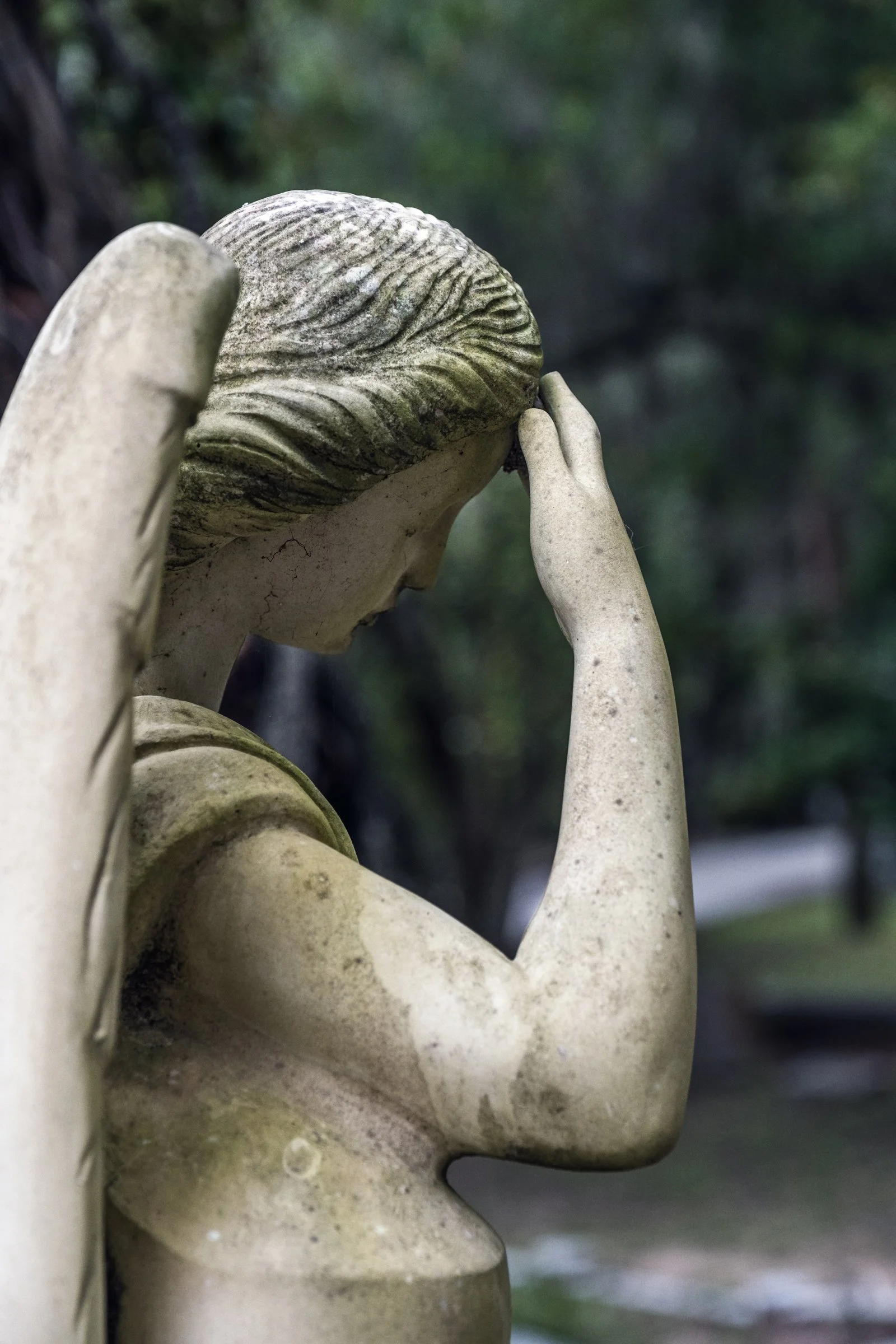
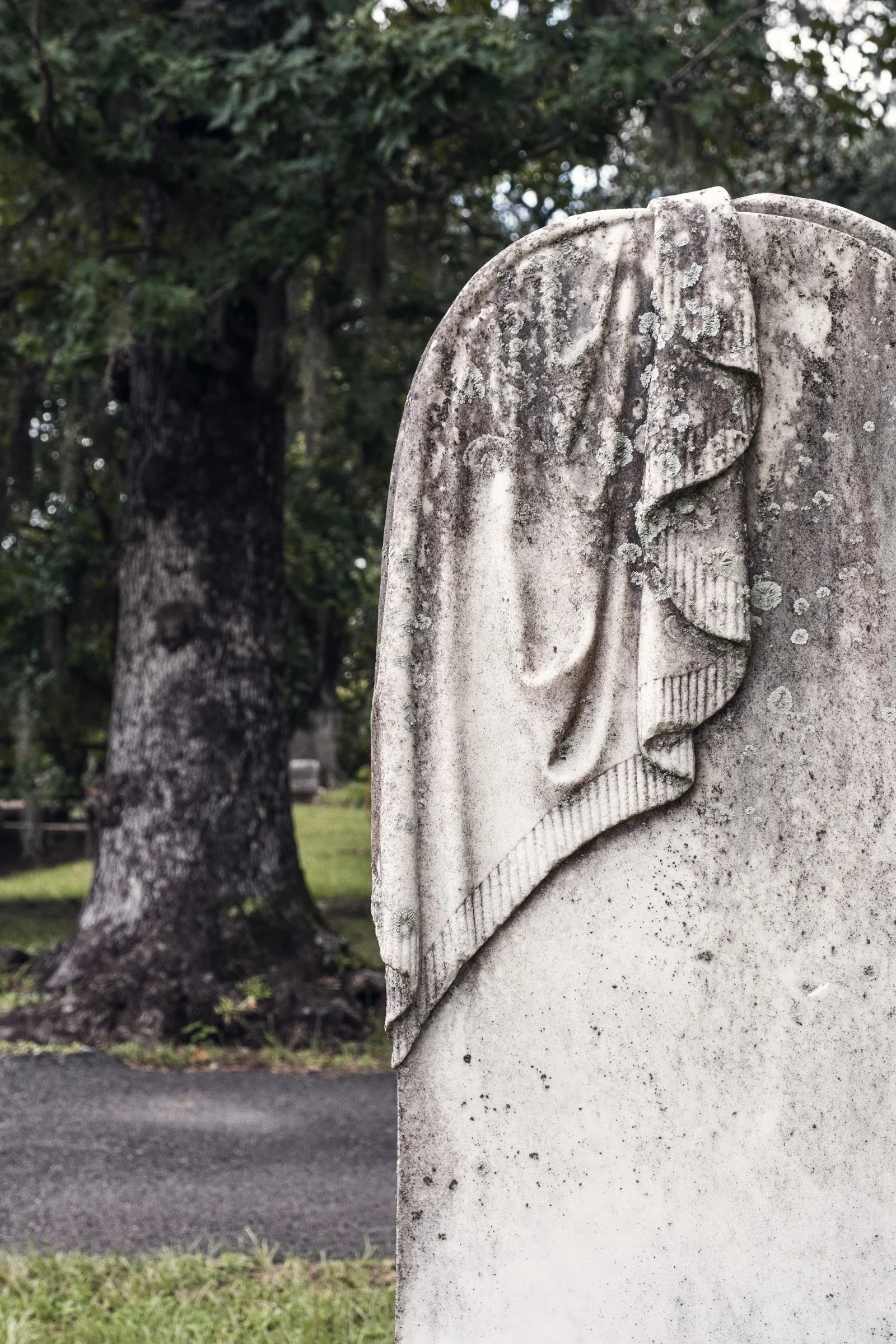
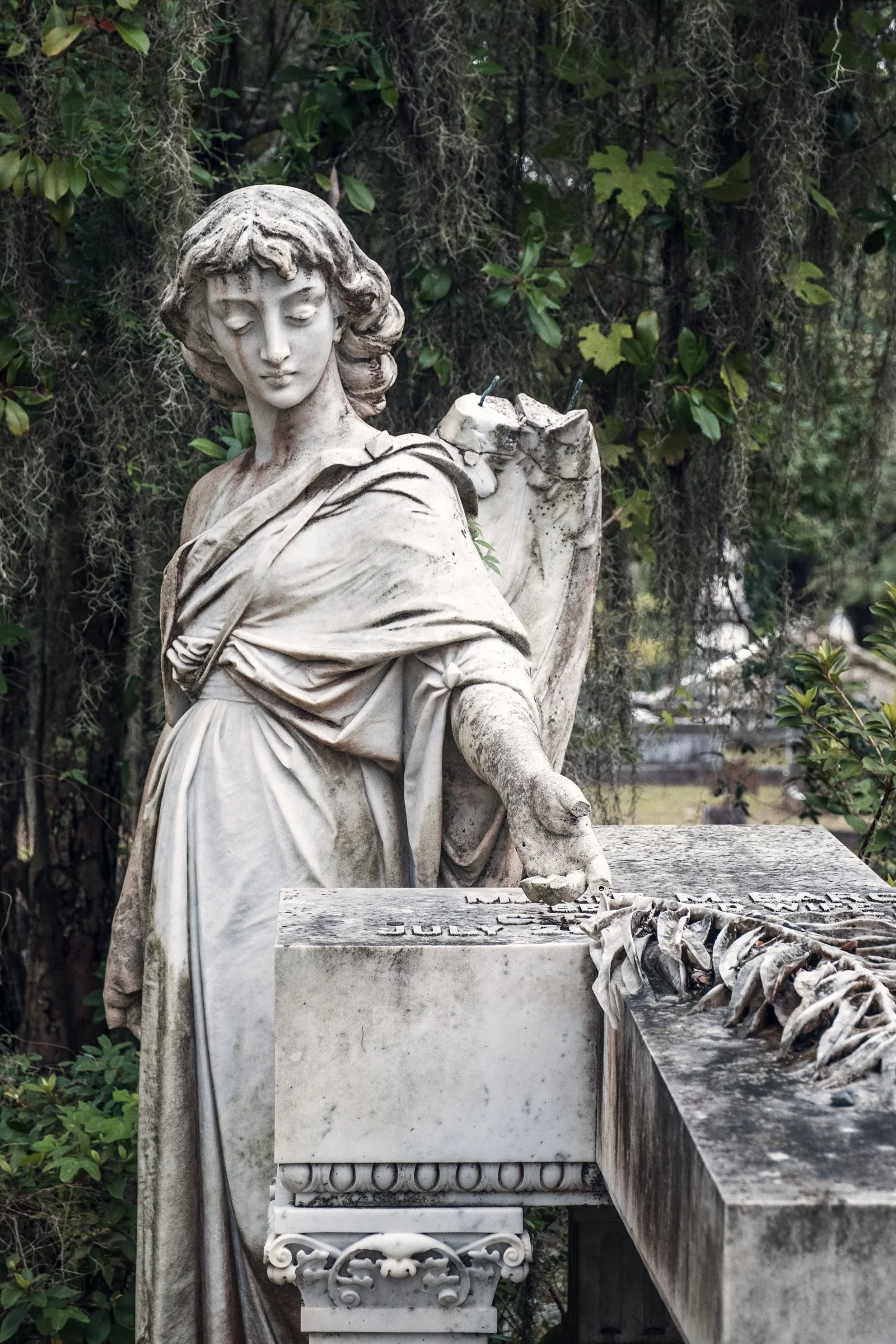
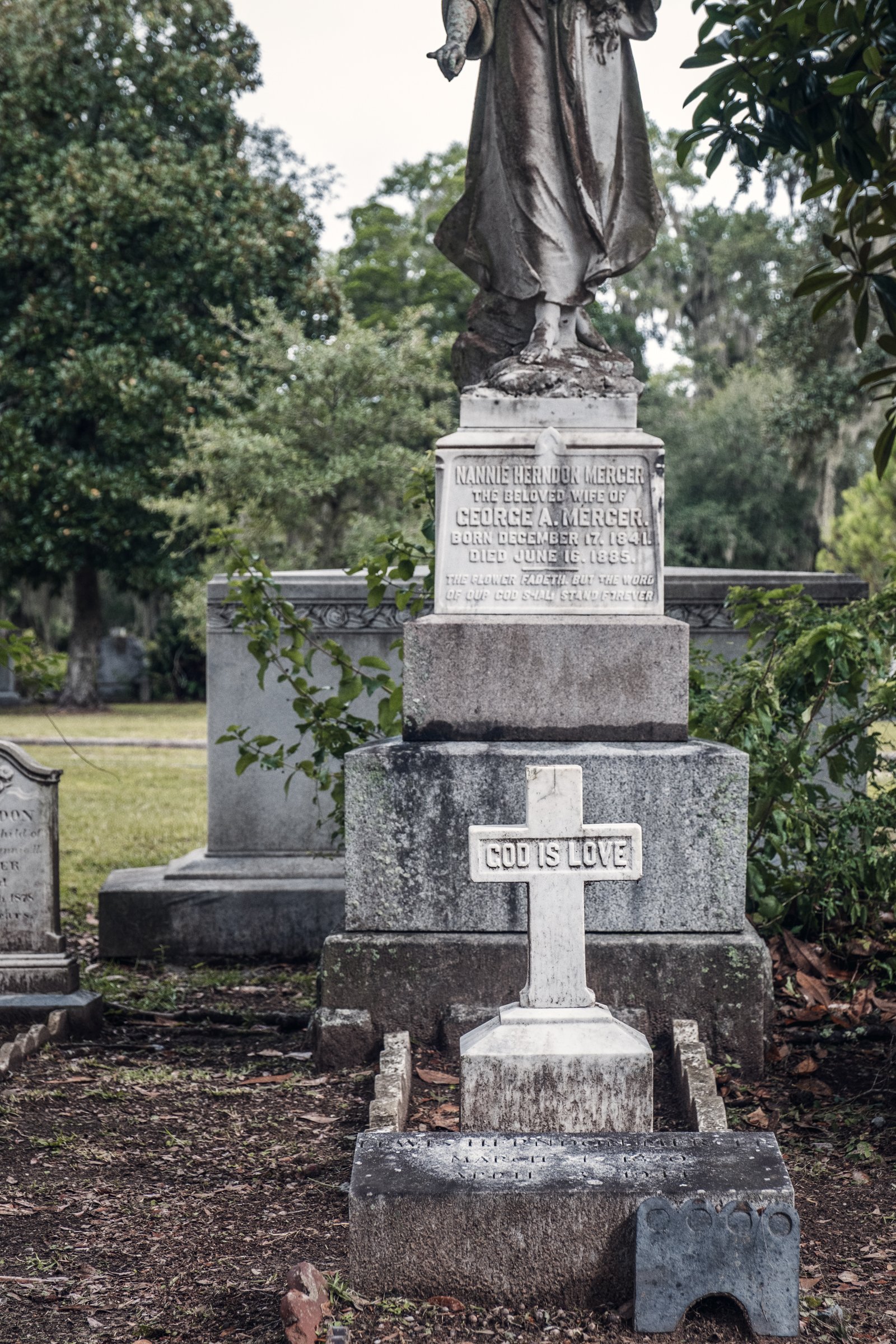
Savannah embodies this evolution.
I came to the city with a singular intention: to walk its cemeteries. I wanted to move carefully, photograph respectfully, and remain open to whatever the spaces revealed. I arrived without a shot list or preconceived ideas—just my camera, some historical reading, and an awareness that these were not simply places to see, but places to enter.
I selected three cemeteries and spent time in each. I couldn't control the light or the conditions. I could only slow down.
What unfolded was a quiet meditation: Who were these people? What shaped their lives? What did they hope for? And who did they leave behind?
In modern life, cemeteries resist erasure. To step inside one today is to recalibrate your attention. A cemetery does not demand interpretation. It asks for presence.
A cemetery is not simply a place for the dead.
It is an archive of names, dates, and relationships.
A record of epidemics, wars, migrations, and inequality.
A reflection of how a society remembers, mourns, and assigns value.
Headstones are not neutral objects. Their materials, inscriptions, symbols, and scale speak to belief, status, wealth, and longing. Even absence—unmarked graves, eroded stones, lost names—tells its own story.
Cemeteries are among the most honest historical landscapes we have. They do not argue. They remain.
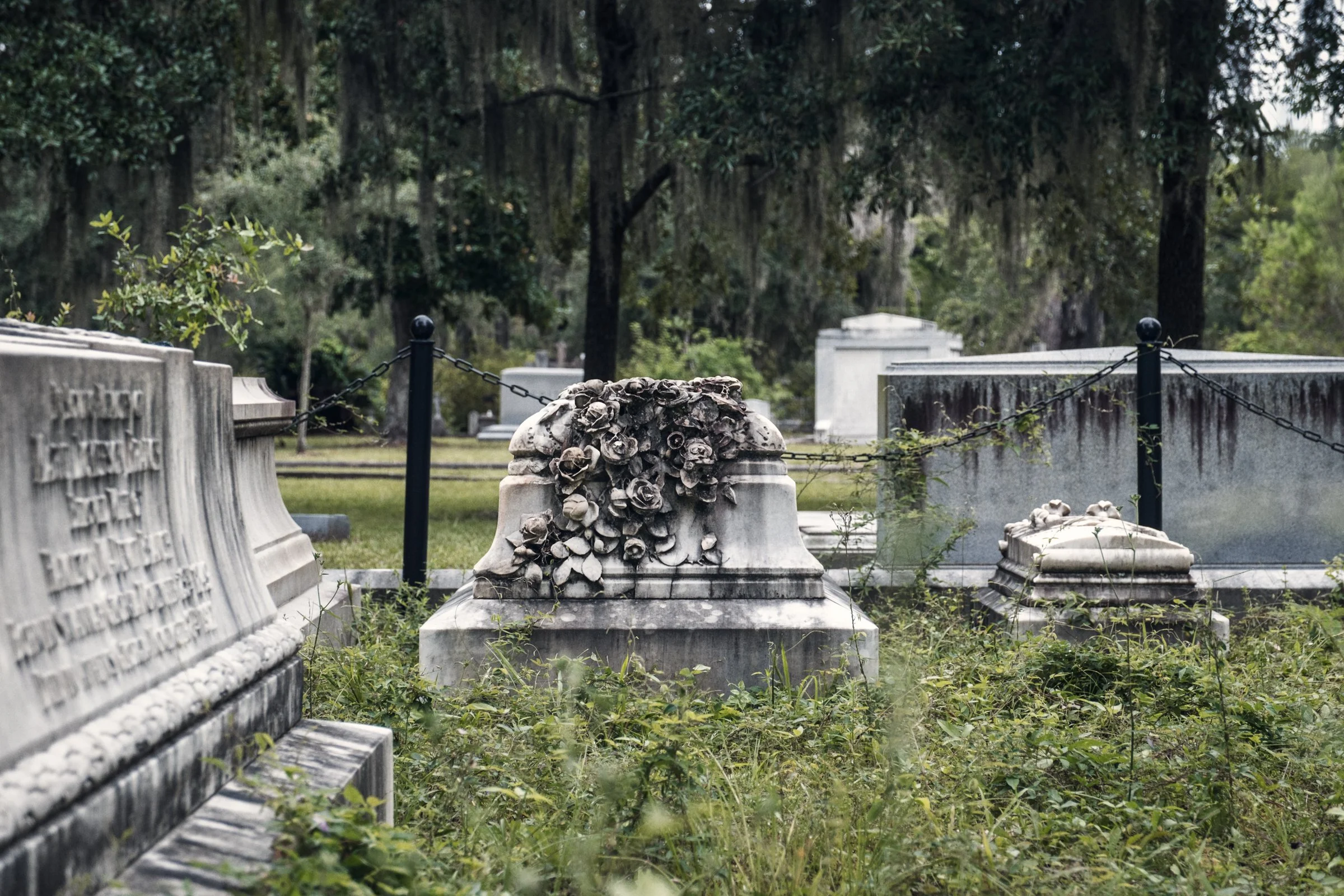
Laurel Grove Cemetery, Savannah, GA
Savannah's relationship to death is inseparable from its history.
Founded in 1733, Savannah is one of America's earliest planned cities, designed by James Oglethorpe with an orderly grid of wards and public squares. As the city expanded, burial practices had to adapt quickly—to climate, disease, war, and population growth. The result is a network of cemeteries that together form a kind of parallel city—one that mirrors Savannah's social structures, beliefs, and contradictions.
Colonial Park Cemetery
Established in 1750, Colonial Park Cemetery served as Savannah's primary burial ground for more than a century. Thousands are interred here, many without markers. The site bears witness to yellow fever epidemics, Revolutionary War casualties, and the limits of early urban planning. By 1853, burials ceased due to overcrowding and health concerns, leaving the cemetery as a preserved memory rather than an active site of interment.
Laurel Grove Cemetery
Founded in 1853, Laurel Grove represents a shift in burial philosophy. Designed as a rural cemetery outside the city center, it reflects the nineteenth-century belief that cemeteries should be spacious, landscaped, and ordered. It also reflects the racial hierarchies of its time, with clearly divided sections for white and Black Savannahians—a reminder that even in death, social structures persisted.
Bonaventure Cemetery
Perhaps Savannah's most iconic cemetery, Bonaventure began as a private plantation burial ground before becoming a municipal cemetery in 1907. Its sweeping oaks, Spanish moss, statuary, and riverfront setting transform burial into something almost lyrical. Bonaventure reflects a Southern tradition of memorialization that blends beauty, grief, storytelling, and permanence.
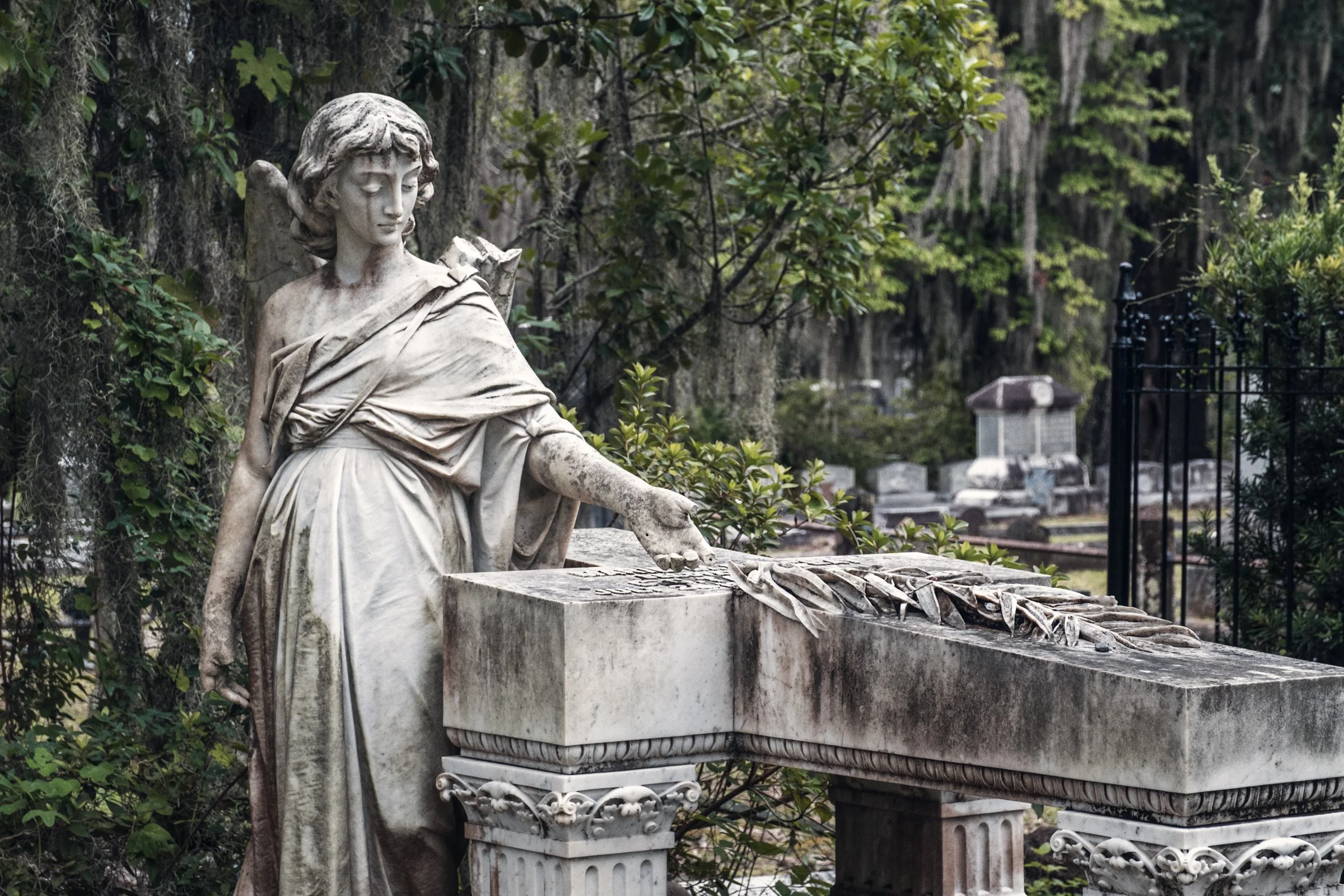
Bonaventure Cemetary, Savannah, GA
Together, these cemeteries offer more than historical context. They offer a way of relating to time itself—of remembering that all things pass, including us.
For the cultural traveler in Savannah, this is the invitation: to see the city not only as a living place, but as one shaped by countless lives that came before. To discover that the most enduring stories are often held in the quietest spaces.
When we walk these grounds with care, we are not simply observing history.
We are standing inside it.
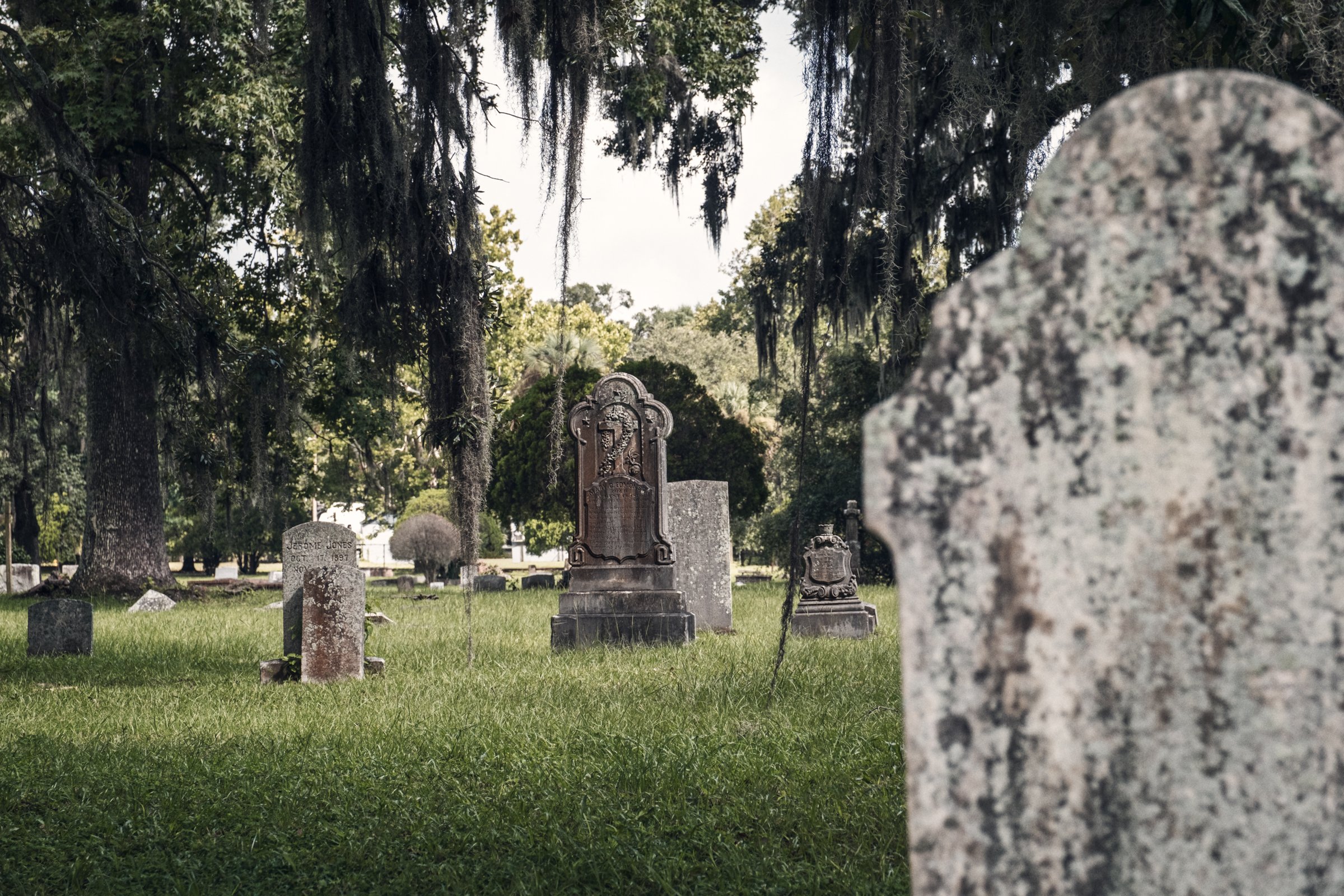
Laurel Grove Cemetery, Savannah, GA
