
Cathedral of Iron: Memory, Labor, and the Making of Birmingham
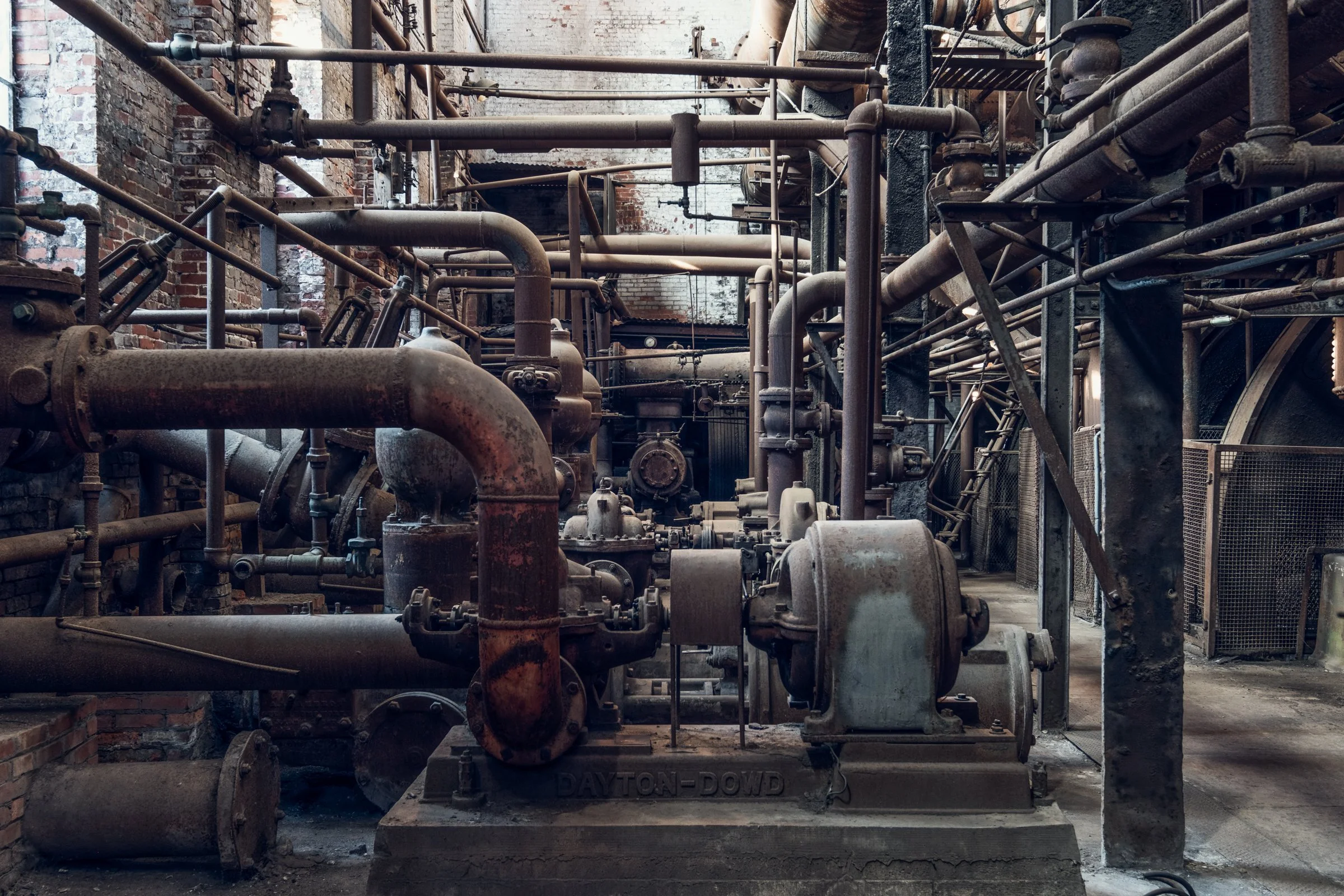
Sloss Furnaces, Birmingham, AL
Some places call you back.
In the fall of 2025, I had the honor of photographing Sloss Furnaces, one of Birmingham's most consequential industrial landmarks. I had been thinking about this place since I missed my chance the year prior—arriving on a day Sloss was closed as I continued my cross-country drive from Napa to Charlotte. Since then, Sloss lingered in my imagination: a site with its own gravity, a place I knew I would return to with my camera.
Before the shoot, I met with Tyler, Sloss's business director and on-site historian, who generously walked me through the grounds. He spoke openly—not only about innovation and vision, but also about the darker chapters of Sloss's history: the extreme working conditions, the loss of life, and the use of convict leasing in Alabama's coal mines. There was no attempt to soften the past, only to place it honestly within the larger story of the site.

Geology and Ambition
To understand Sloss is first to understand why it exists at all. In the decades following the Civil War, industrialists recognized that north-central Alabama possessed a rare geological convergence. Within a thirty-mile radius lay all the essential ingredients for iron production: iron ore stretching through Red Mountain, abundant coal deposits to the north and west, and limestone beneath Jones Valley itself. This proximity allowed iron to be produced more cheaply than in the North—a decisive advantage in the postwar South.
Among those who recognized this opportunity was Colonel James Withers Sloss, a merchant and railroad man who helped secure Birmingham's future by connecting it to the Louisville & Nashville Railroad. By March 1881, the Sloss Furnace Company was formed, backed by railroad executives and industrial capital. Construction began that summer, guided by engineer Harry Hargreaves, who brought European training and British furnace design to the site.
The first blast came in April 1882. Within a year, Sloss had produced 24,000 tons of iron. At the 1883 Southern Exposition in Louisville, Sloss iron earned a bronze medal for "best pig iron," and Birmingham soon became known as "the Pittsburgh of the South." Sloss Furnaces stood at the center of that identity—its stacks rising as declarations of modern ambition.
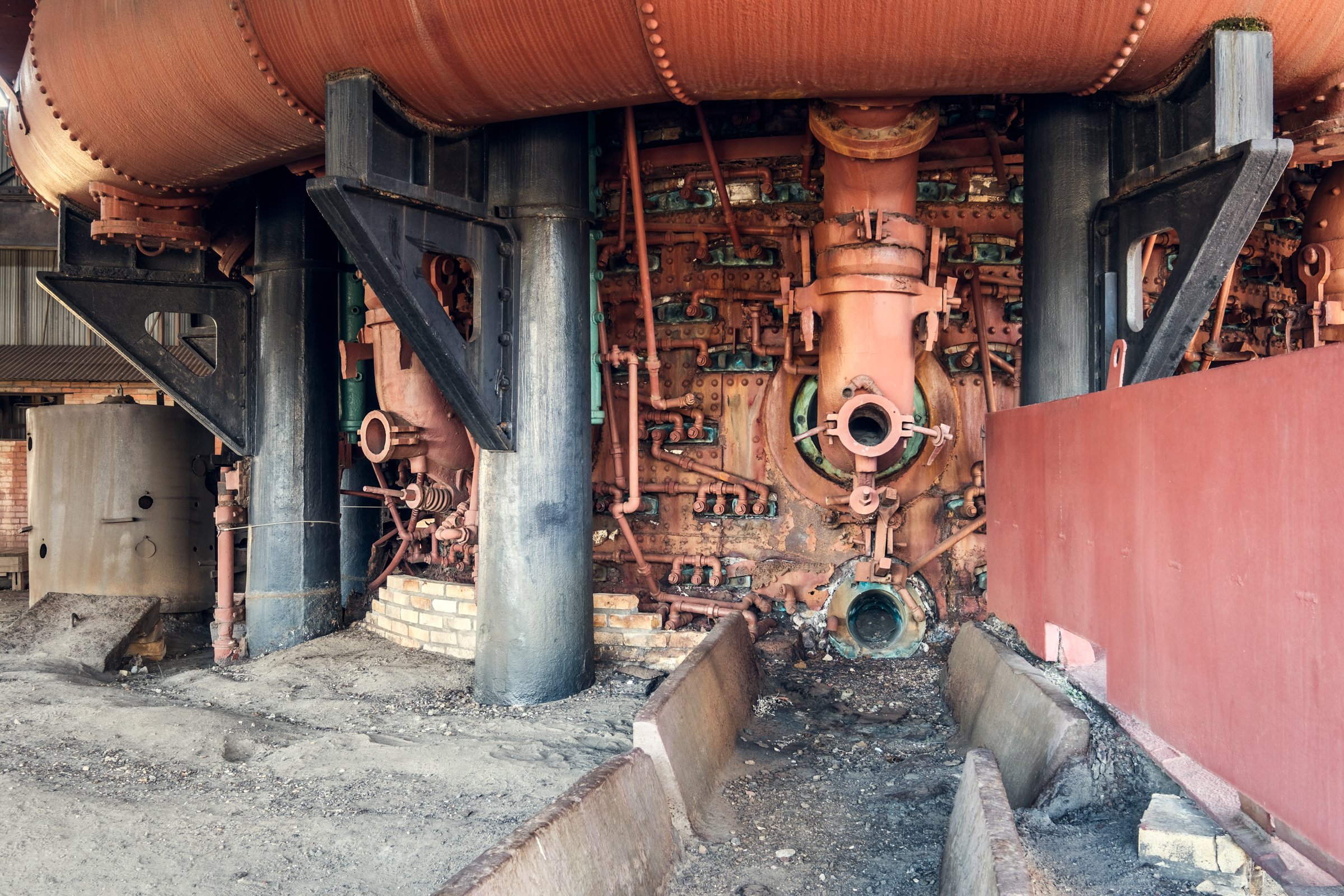
Sloss Furnaces, Birmingham, AL
Seeing the Site
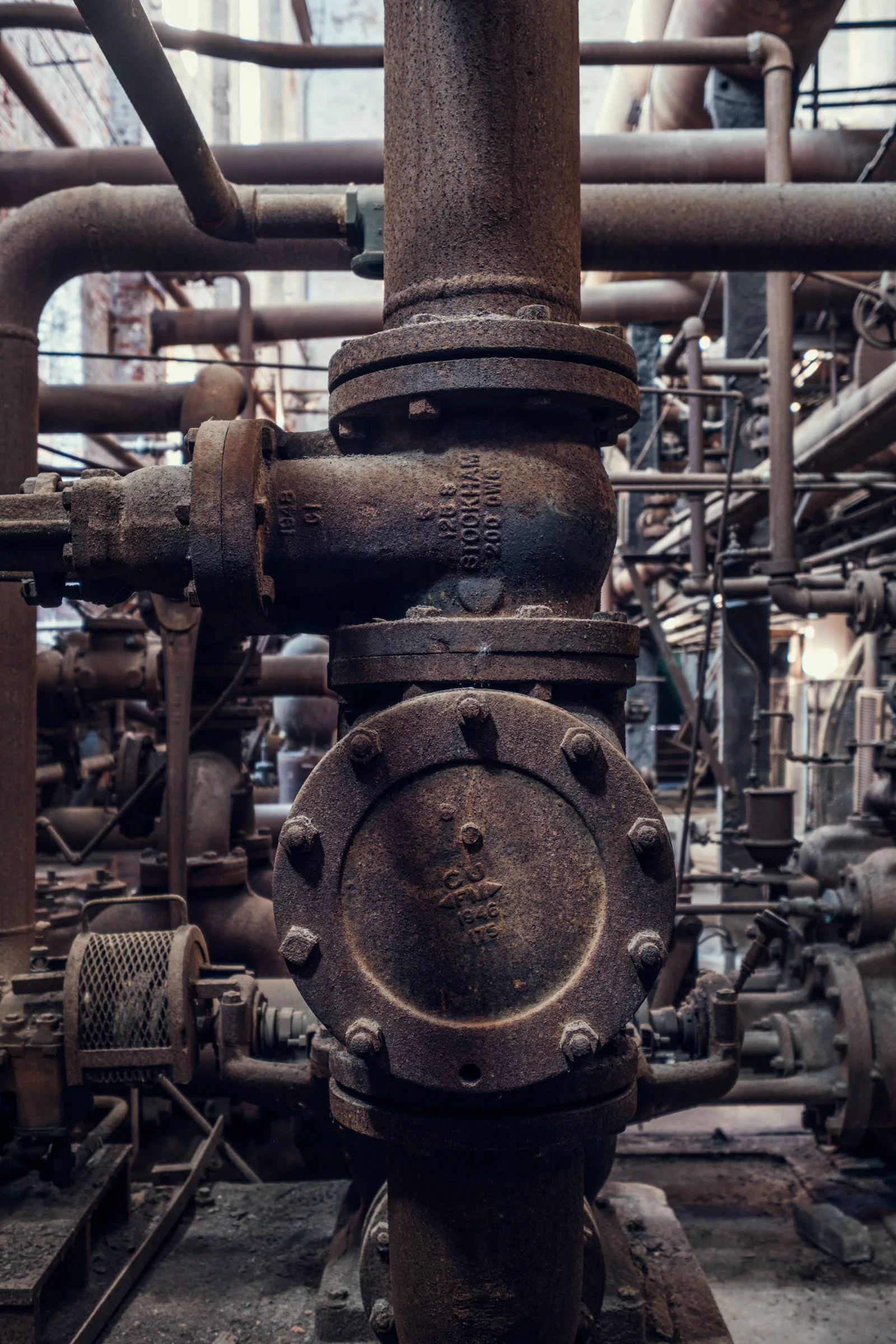
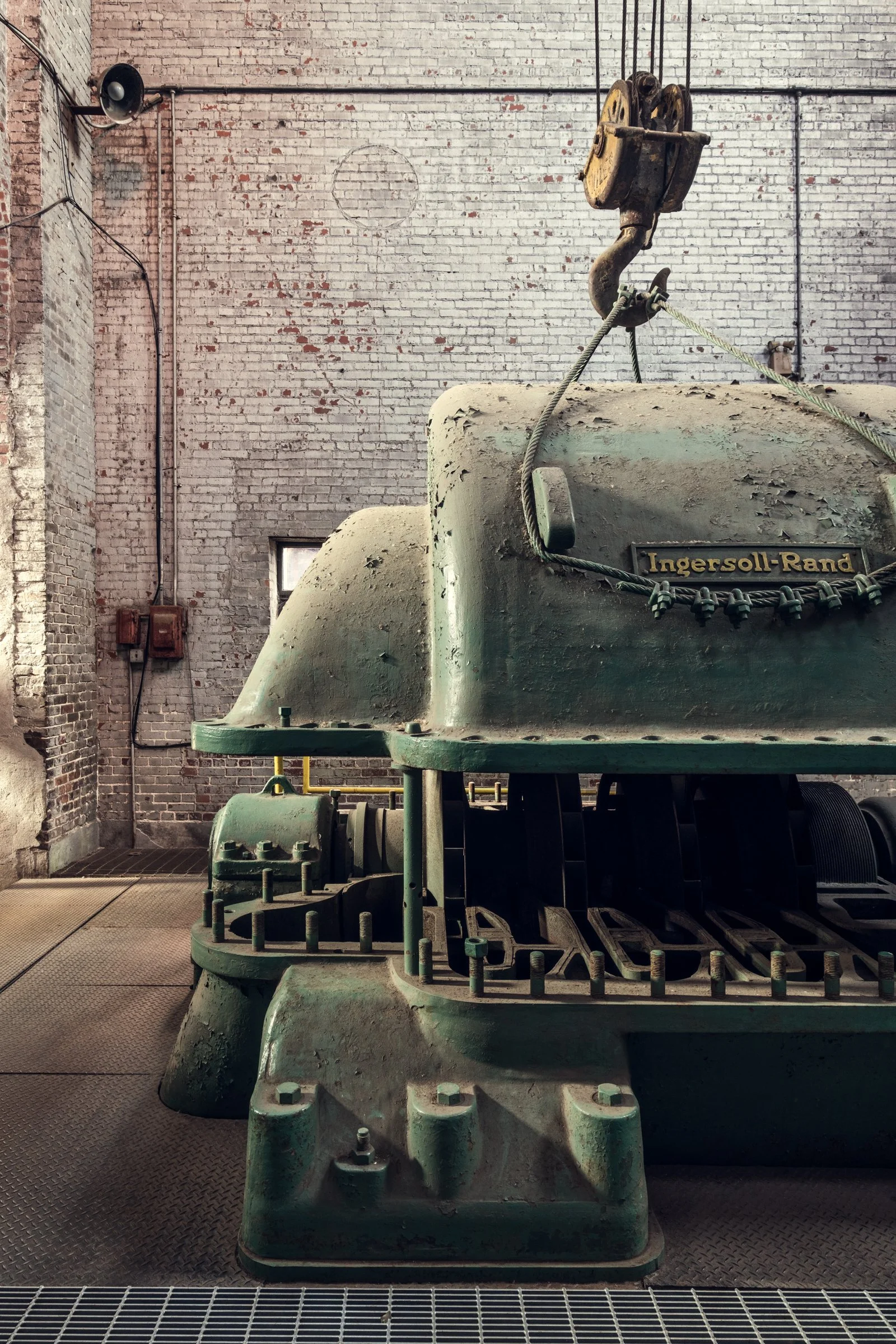
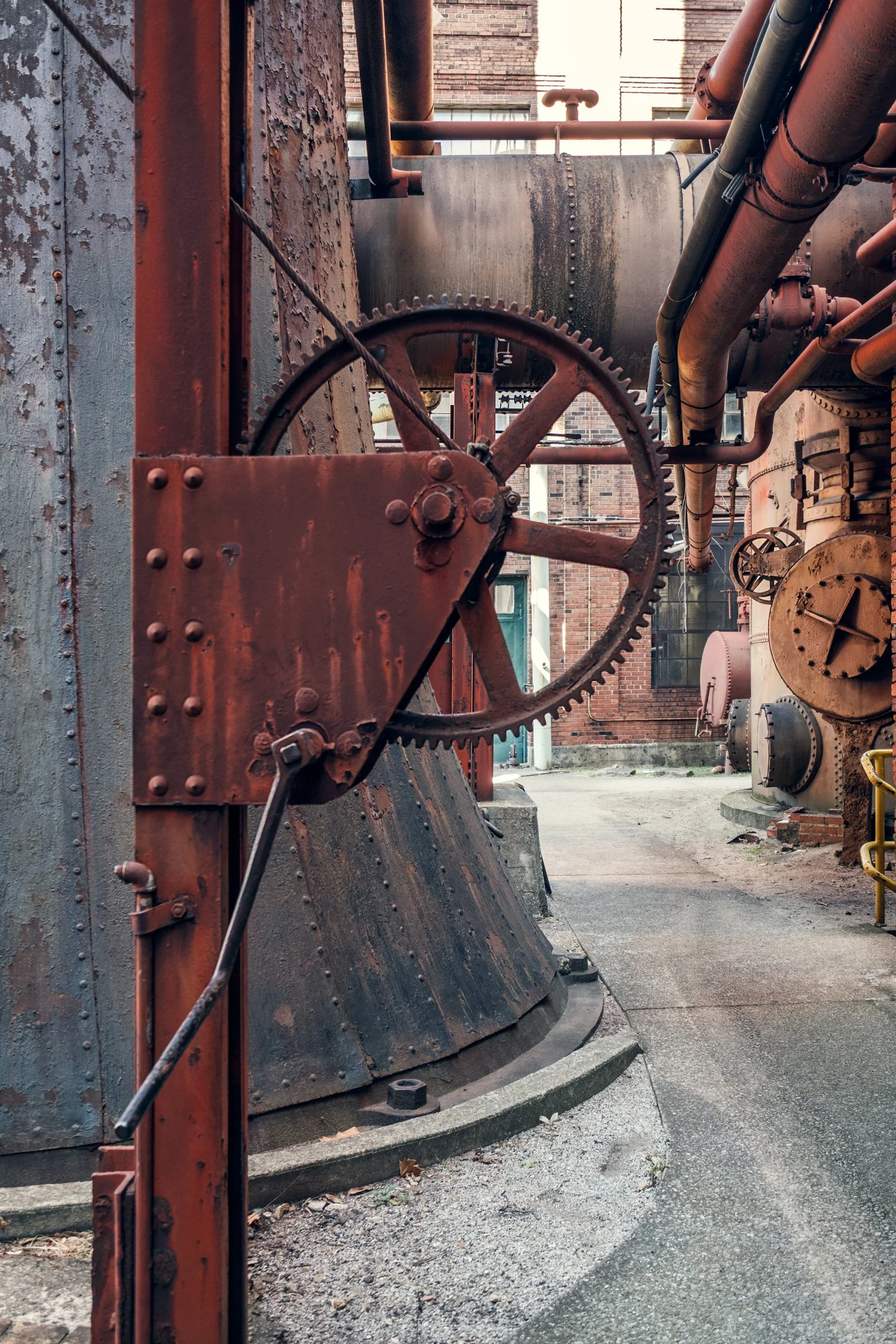
I photographed for just over four hours. The shoot was energizing—and also one of the most challenging I've done—not because of light or weather, but because of the sheer density of the structure. Everywhere: pipes, bolts, rust, catwalks, rails—layer upon layer of material purpose. At first, it felt almost impossible to make a coherent visual story from so much machinery and mass. My mind took it in like noise—like a child banging pots and pans.
So I stopped, breathed, and followed my instincts.
I moved slowly, grounding my horizontals, taking in one element at a time, looking for order inside the mechanical excess. And gradually, the place began to reveal itself—lines that held, shapes that repeated, passages where weight turned into rhythm. I'm grateful for what emerged. These images, I think, carry the story with power and a kind of historical potency that derives from a hundred plus years of life.
Labor and Cost
By the turn of the twentieth century, Sloss-Sheffield Steel and Iron Company had grown into an industrial empire—seven blast furnaces, thousands of coke ovens, mines, quarries, and thousands of workers. The labor hierarchy reflected the racial and social realities of the era: white managers and engineers at the top, a racially mixed skilled middle, and an all-Black labor gang performing the most dangerous physical work.
Like many industrial operations in Alabama, Sloss utilized the state's convict leasing system in its coal mines from 1887 until the practice was abolished in 1928. Under this system, incarcerated men—overwhelmingly Black—were leased to private companies for labor under harsh conditions and high mortality rates. It was legal. It was profitable. And it left deep scars.
To the credit of Sloss Furnaces as a historic site today, this history is not hidden. Through partnerships with the Equal Justice Initiative and the Jefferson County Memorial Project, markers now stand in remembrance of those who lost their lives in the mines—acknowledging that industrial progress came at a human cost.
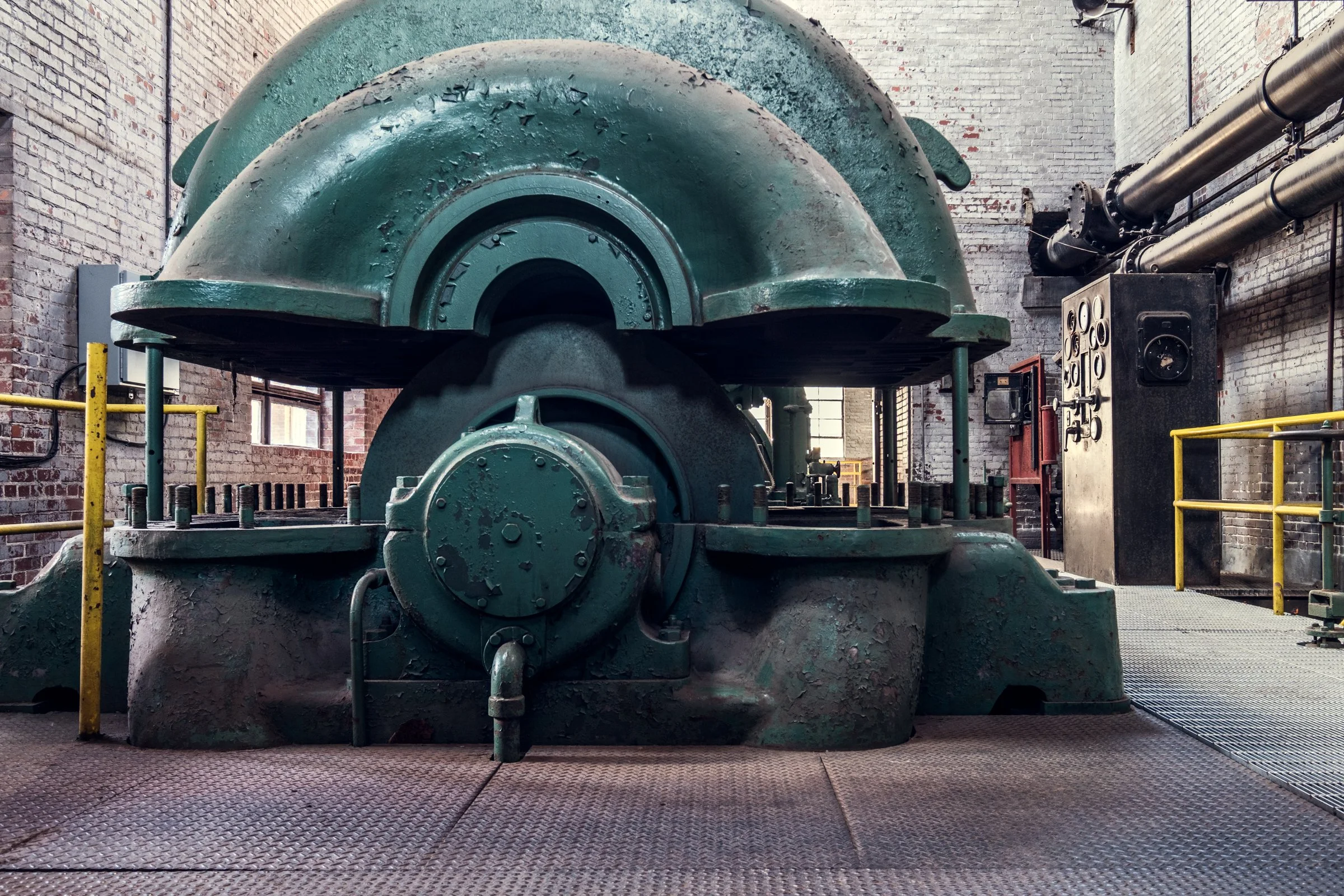
Sloss Furnaces, Birmingham, AL
Innovation and Reach
Sloss was also a site of engineering innovation. Under superintendent James Pickering Dovel, the furnaces became a testing ground for new designs, improved linings, and gas-cleaning systems adapted to Alabama's raw materials. Major rebuilds in the late 1920s modernized the site, increasing efficiency and output.
Iron produced here traveled far beyond Birmingham—into railroads, pipes, ships, and cities. During World War II, Sloss iron was poured almost entirely into munitions production. Hundreds of employees served overseas. The furnaces ran at capacity, feeding a nation at war.
But by the late twentieth century, change came. New materials reduced demand for pig iron. Competition increased. Environmental regulations tightened. In 1971, after nearly ninety years of continuous production, Sloss City Furnaces shut down.
From Industry to Memory
What followed was not demolition, but preservation.
Local citizens rallied to save Sloss. Bonds were passed. Structures stabilized. In 1981, Sloss Furnaces was designated a National Historic Landmark, and in 1983 it reopened to the public—not as a relic, but as a living site with a second purpose.
Today, Sloss lives a generous second life: a place of education, metal arts, music, and reflection. The furnaces remain largely intact. You can follow the paths of materials and labor, trace the logic of the site, and intuit what it once took to keep iron moving day and night.
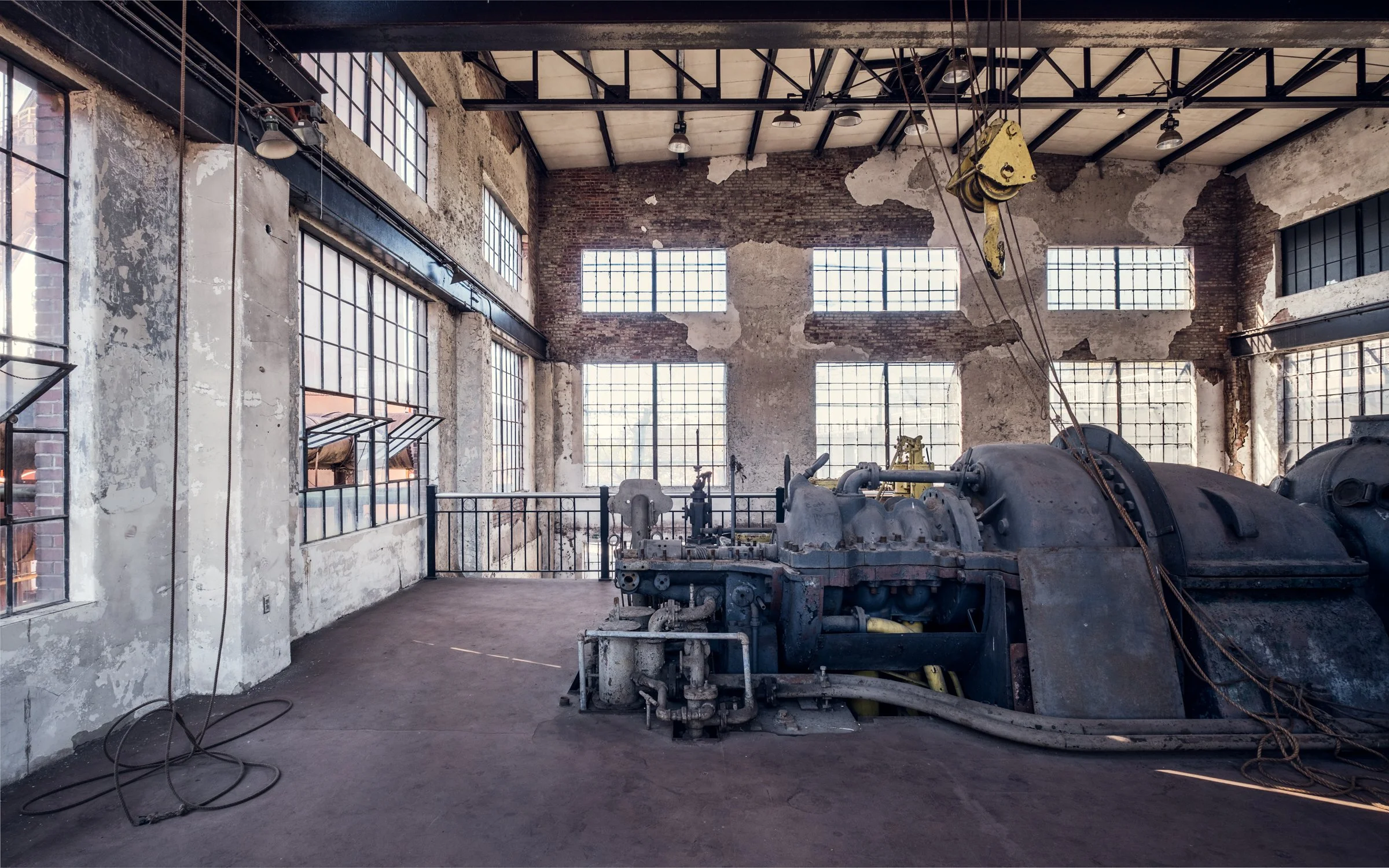
Sloss Furnaces, Birmingham, AL
A Living Record
What I appreciate most is that Sloss is now preserved as a public place.
Today, the site is dedicated to preservation and education—but it's also a center of civic life. Concerts, theater performances, music and food festivals, weddings, reunions: gatherings that return people to the grounds, not as workers under pressure, but as a community. Public talks, lectures, and free site tours offer insight into Sloss's industrial heritage and provide a rare glimpse of an earlier Birmingham that has nearly disappeared.
Sloss also carries a remarkable tradition of making. Its Metal Arts Program is active and innovative, offering workshops and classes across sculpture and fabrication—pattern making, mold making, casting, welding, cutting, forging. There's something profound about learning those processes here, in the shadow of the original machinery, where Birmingham's identity was once shaped by heat, chemistry, and labor.
And importantly, Sloss keeps listening. Since opening to the public, the site has been collecting oral histories—voices from black and white workers who speak not only to the technical aspects of the plant, but to what it felt like to work there. One worker described it as the "gates of hell." There are also oral histories from women who lived in the Sloss Quarters—stories that reveal the daily life of company housing, and the strength it took to build families amid segregation and discrimination, adapting rural customs and traditions to a new industrial world.
All of this makes Sloss more than a landmark. It becomes a living record of the South's industrial heritage—its ingenuity and ambition, its hardship and cost, its community and culture. As one former worker put it: "A lot more than iron flowed from those furnaces. Our whole culture did. Our whole way of life."
Iron shaped Birmingham. Sloss shaped that iron.
And now, preserved as a place of memory, Sloss asks us not to simplify the past—but to stand within it, and see.
