
What Places Say When We Stop to Listen

Golden Sands Hotel, NC
I stopped in my tracks.
Not from any visible interruption — but from something that arrived before I could name it. I stood still, and directed my awareness away from sight and toward the sounds of the forest. And my surroundings began to speak.
At first, it was subtle. Then it gathered.
The woods resounded — not chaotically, but with a quiet precision — as if an unseen orchestra had been playing long before I arrived. Birds entered my consciousness one by one. Some called in sharp, deliberate tones. Others offered softer, melodic phrases that lingered just long enough to be felt. Each sound distinct, yet belonging to the same composition.
Then came the wind.
It glided through space, brushing against leaves and branches, shifting them gently from stillness into motion. The trees responded like instruments, their limbs creaking, whispering, swaying in a rhythm not dictated, but discovered.
I began to walk. And with each step, I became part of it.
The sound of my boots pressing into the earth — the crunch of gravel, the soft resistance of dirt, the snap of a fallen branch — joined the symphony.
I had not entered the woods through vision. I had entered through sound.




Every place has a soundscape — an acoustic identity, a living composition formed by nature, the built environment, and human life unfolding in time. We tend to move through places with our eyes. But when we shift our attention from what we see to what we hear, something in us quiets. Our sight does not go away. It remains in the background. But our presence grows.
And presence, it turns out, is where meaning lives.
Sound Connects Us to Memory
Sound bypasses the intellect and goes straight to the heart.
A single note, a distant echo, a familiar rhythm — and suddenly, we are transported, viscerally, into the ground of our being.
The sound of cicadas on a humid Southern evening. A train whistle cutting through the night. The creak of an old wooden floor beneath your feet. Children laughing in the distance.
These are not just sounds. They are anchors — binding us to moments, to places, to people we once were. Long after images fade, it is often sound that remains. It lingers. It returns. It reminds.
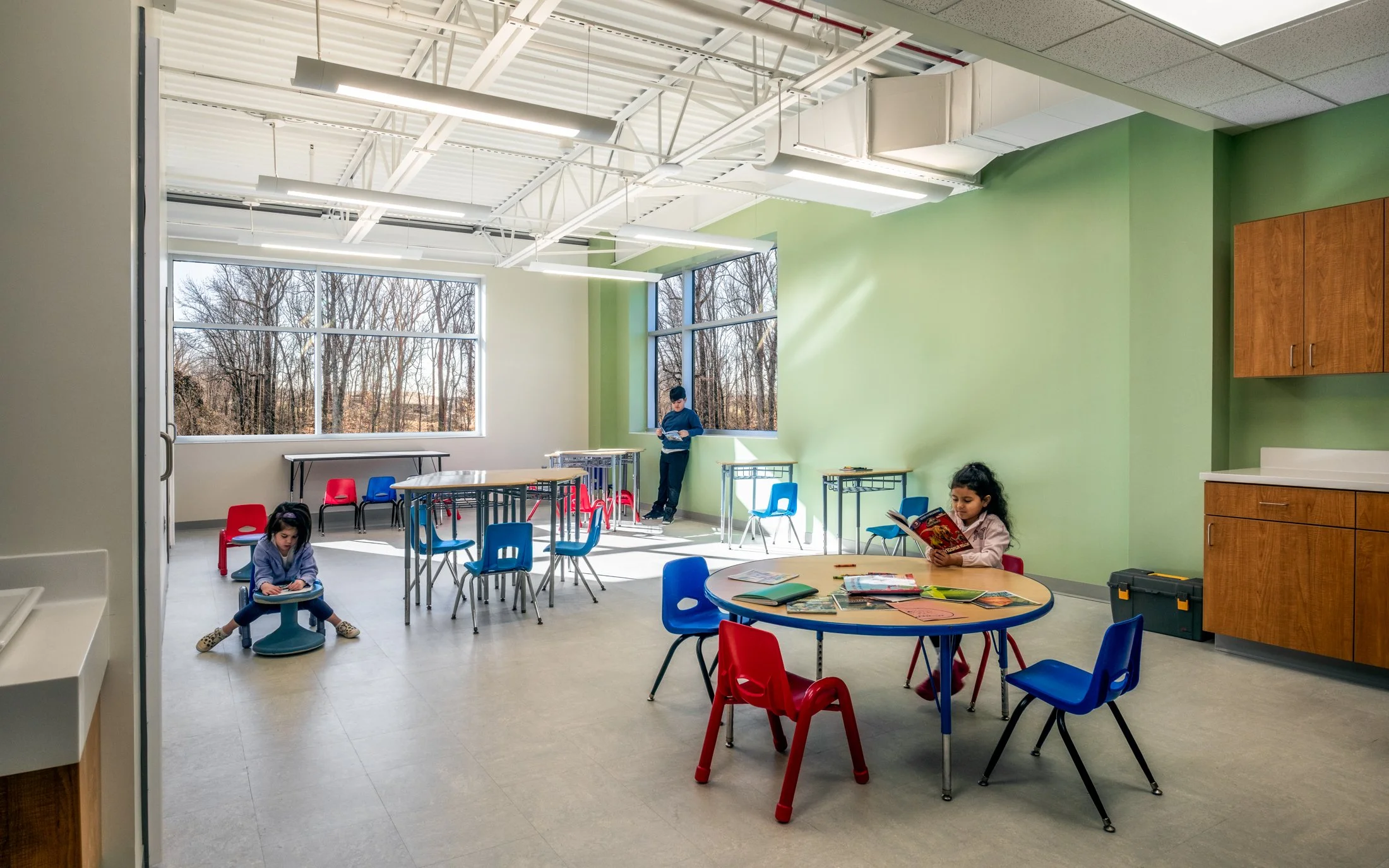
Hayes-Taylor YMCA - Greenboro, NC
Sound Connects Us to Culture
If you want to understand a place, listen to it.
Listen to how people speak, how they gather, what they celebrate. Every culture has its own acoustic language — the cadence of conversation, the rhythm of work, the music that carries its stories, the sounds of worship, of protest, of joy.
In the American South, sound carries history. It lives in gospel songs rising from church pews, in blues drifting through open doorways, in the hum of conversation on front porches at dusk. These sounds are not staged. They are signals that penetrate our deepest sense of being alive. They reveal culture and connection, not as concepts, but as lived experience.
Sound Connects Us to Environment
Sound teaches us how a place breathes.
A dense forest absorbs and softens, drawing you inward. A cathedral echoes and expands our yearning for the divine. An open field carries sound across distance.
Even silence speaks. The absence of noise in a sacred space. The stillness before a storm. The quiet of early morning before the world awakens. These are not empty moments — they are full, pregnant with presence. When we listen closely, we begin to sense not just where we are, but how that place exists.

Napa, CA
One sound, in particular, always makes me smile.
On a recent afternoon at Holbrook Park in Charlotte, I heard it before I saw it — children on the playground. There is a kind of unfiltered joy in that sound — a freedom, an abandonment of self-consciousness that is both rare and deeply familiar. Laughter rises without restraint. Voices overlap. Energy spills into the air without hesitation.
Close your eyes for a moment and listen. Not just to the sound, but to what it carries. There is something in it that reminds us — quietly, persistently — of who we once were. Or perhaps, who we still are beneath everything we have learned to contain.
It is not just sound. It is life, unguarded.
When we listen carefully, we begin to recognize that a place is not just a backdrop. It is alive — with stories, with rhythms, with voices that existed long before we arrived and will continue long after we leave.
The practice is simple, though not always easy to remember: take time to pause when you enter a new environment. Let the soundscape come to you. Listen for layers, for the space between the sounds — the natural, the human, the orchestra of the built — and notice what moves through you. Return at different times of day. Close your eyes if appropriate. Let sound take the lead.
To listen is to honor and remember the presence that animates us all.
To truly know a place, and our relationship to it, we must not just look — but listen.
